



Closing the Gap for Multilingual Learners Starts with Educator Skill — Not Just Curriculum

With more than 20 percent of young children in the United States speaking a language other than English at home, districts are investing heavily in curriculum adoption, translation resources, and compliance frameworks for their growing Multilingual Learner (MLL) and English Language Learner (ELL) populations.
These investments matter. But the data keeps pointing to a systemic challenge that curriculum alone cannot fix.
MLL students are not falling behind because they lack access to good content. They are falling behind because the moment-to-moment quality of interaction between teacher and student—the back-and-forth exchanges that drive language acquisition and comprehension—is not happening at the same rate it happens for their peers.
That gap is not a curriculum problem. It is an educator skill problem.
This is the hardest kind of challenge to address at scale because it does not show up in lesson plans or materials audits. It shows up in classrooms, one interaction at a time. Solving it requires something most traditional ELL teacher training programs were never designed to deliver: a sustained, coaching-based approach to building the specific interaction skills that ELL/MLL students actually need from their educators.
What the Research Actually Says About MLL Achievement
The research on Multilingual Learner outcomes is consistent and critical for district leaders to understand:
- The Interaction Gap: MLL students engage in significantly fewer back-and-forth exchanges with teachers than their non-MLL peers.
- The Mechanism of Acquisition: Responsive, reciprocal interactions—where a teacher builds on what a student says or does—are not incidental to learning. They are the primary mechanism through which language develops. When they are missing, language acquisition slows.
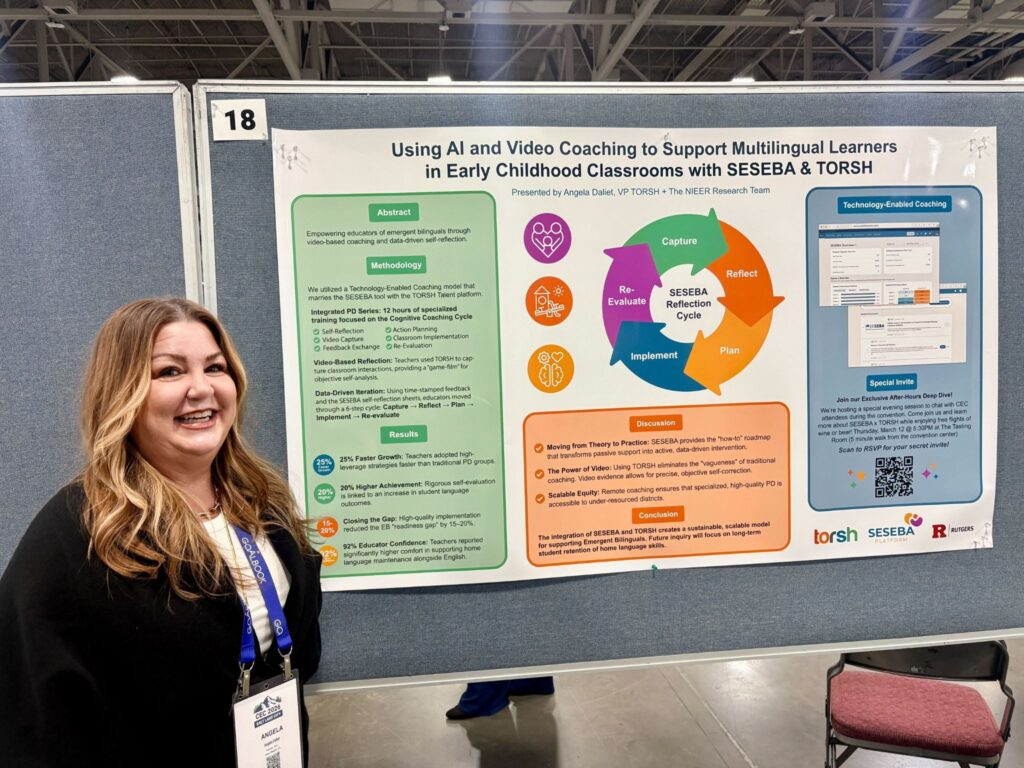
- The Measurable Impact: When high-quality teacher-child interactions are present, the impact is undeniable. As detailed in our 2026 MLL Impact Report, research shows these interactions can improve MLL student achievement gains by an average of 20% within one academic year.
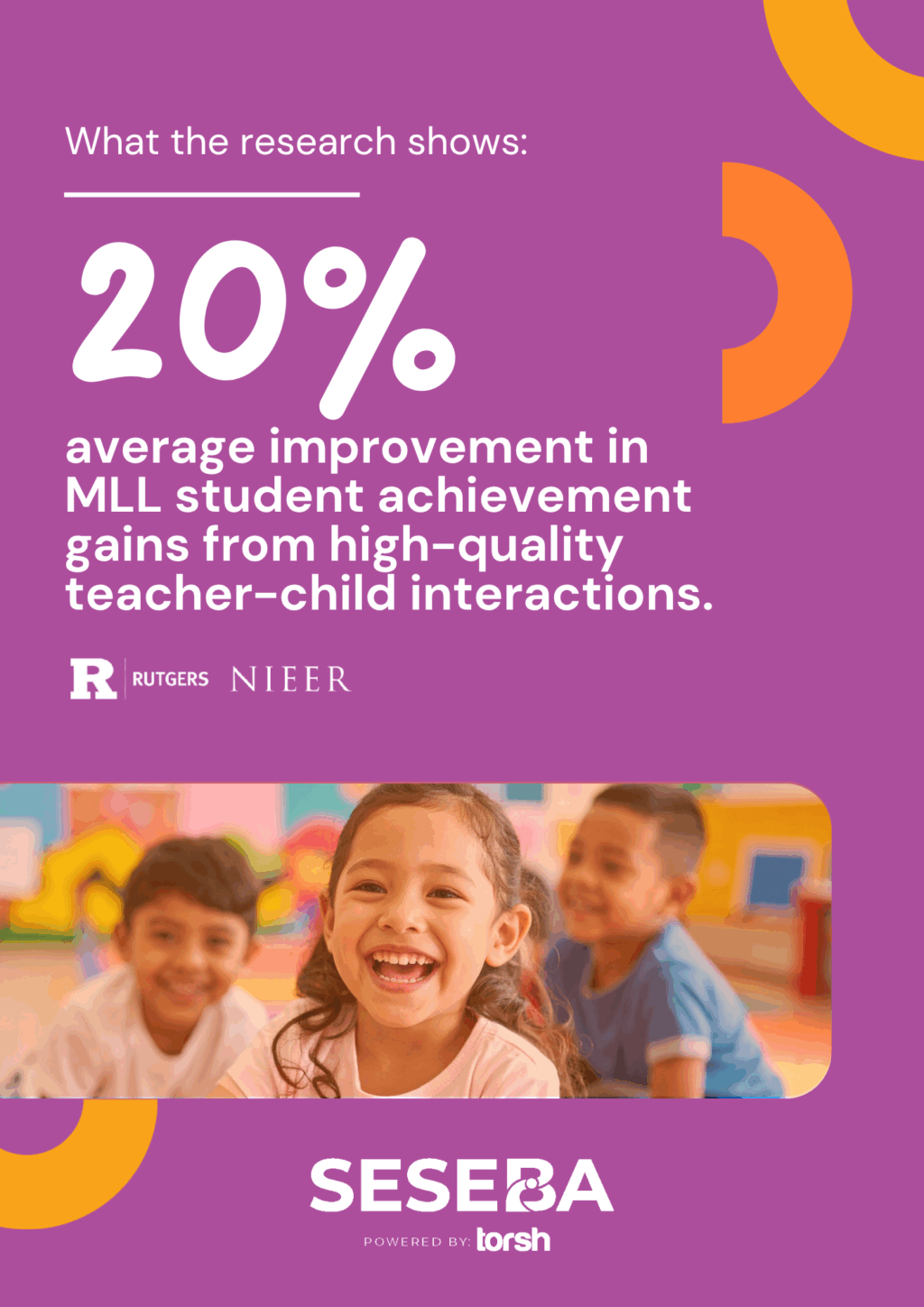
Twenty percent. Within one year. Not from a new curriculum, but from a fundamental change in how educators interact with students.
The question for district leaders is no longer just what teachers are teaching—it is how they are engaging with the students in front of them, and whether the district has the infrastructure to help them get better at it.
Why Standard ESL Professional Development Isn’t Moving the Needle
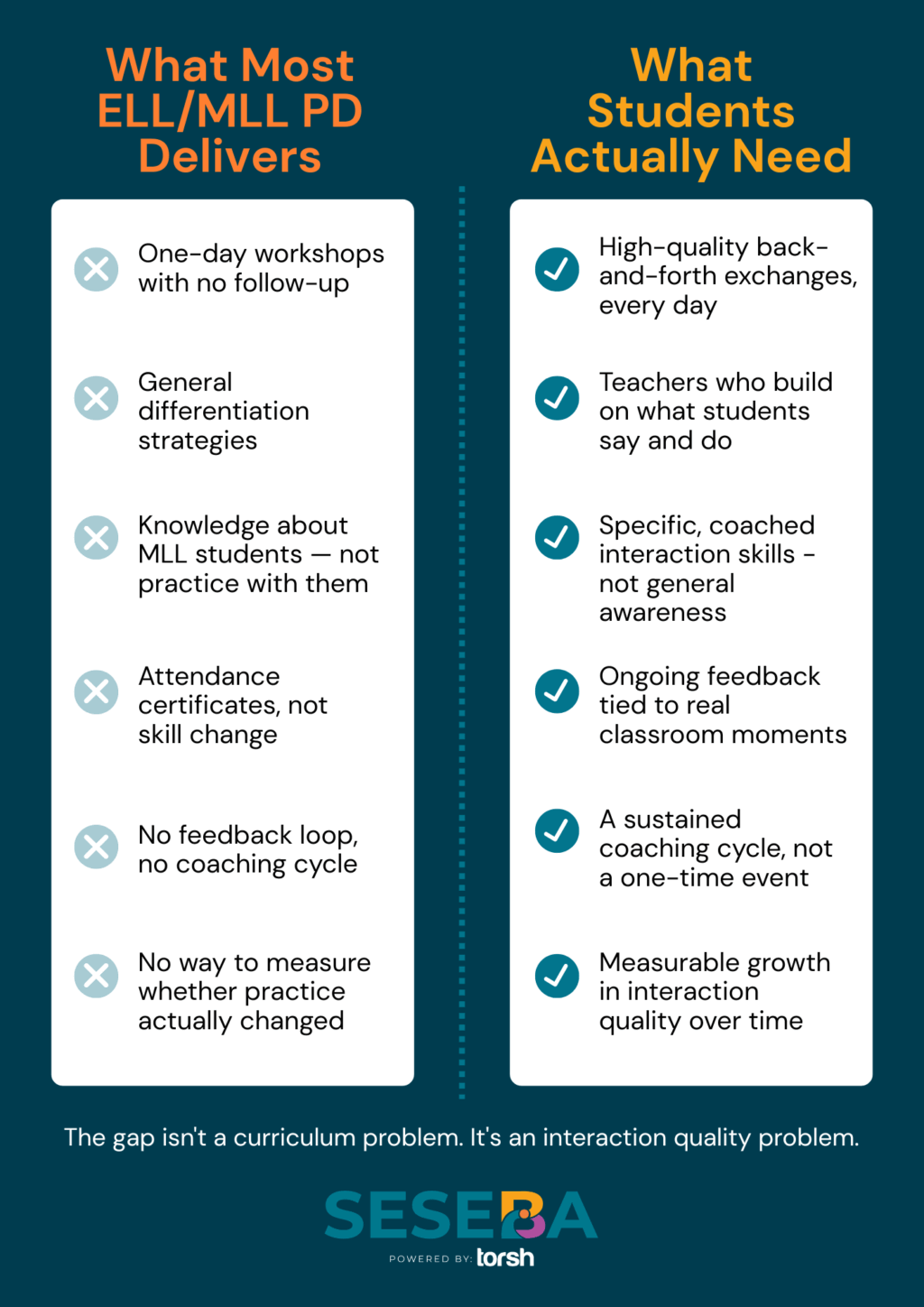
Most ESL professional development looks identical across districts: a workshop, a training day, or perhaps a guest expert. Educators learn about MLL research, receive frameworks for differentiation, and return to their classrooms with the intention to apply what they’ve learned.
But intention is not the same as skill.
The interaction quality gap does not close simply because a teacher attended a training. It closes because a teacher received specific, timely feedback on how they are actually engaging with MLL students in real-time—and then had the opportunity to practice, reflect, and improve.
That requires a coaching cycle, not a workshop. Because most ESL professional development programs are event-based rather than coaching-based, the needle rarely moves. The districts seeing real improvement in MLL outcomes have shifted to embedded, ongoing skill development where coaches observe practice, give feedback tied to specific moments, and track improvement over time.
What It Actually Takes to Scale ELL Teacher Training
Scaling educator skill development for MLL outcomes requires three specific pillars that most ELL teacher training programs do not currently provide:
- A Research-Backed Framework for Interaction Quality: Districts need a structured approach to identifying and improving the specific teacher-child interactions that drive MLL achievement. Broad culturally responsive teaching principles or general differentiation strategies are not enough. Without a specific framework, coaching becomes subjective and inconsistent.
- Observation Infrastructure That Doesn’t Require Being in the Room: Instructional coaches and program leaders cannot physically observe every teacher every week. The programs making consistent progress have moved to asynchronous video observation and structured self-reflection. Educators record lessons, upload them to a secure platform, and evaluate their own practice without requiring a scheduled in-person visit. This is the only model that scales across an entire district without becoming logistically impossible.
- Data Connecting Coaching to Student Outcomes: Leaders must be able to prove that their professional development investments are working. This requires a platform that tracks coaching cycles, documents educator growth, and generates reports that connect directly to the metrics funders and state agencies demand.
SESEBA on TORSH: The Infrastructure Behind the Skill
SESEBA is a research-based framework developed specifically for districts supporting Multilingual Learners. Its core finding is the one this post opened with: teacher-child interaction quality is the missing link in MLL achievement—not curriculum, not materials, but the quality of moment-to-moment engagement between educator and student.
SESEBA provides the framework. TORSH Talent provides the infrastructure to put it into practice.
SESEBA on TORSH is a two-part professional learning ecosystem, and the distinction matters:
- Structured Skill Building: Educators move through grade-level interactive modules built around SESEBA’s eight research-based Focus Items, covering everything from gathering family information and classroom environment to intentional teacher talk and literacy skill development. Each Focus Item includes strategies organized across three progression levels (from foundational practices to more advanced techniques) so educators build skill systematically, not all at once.
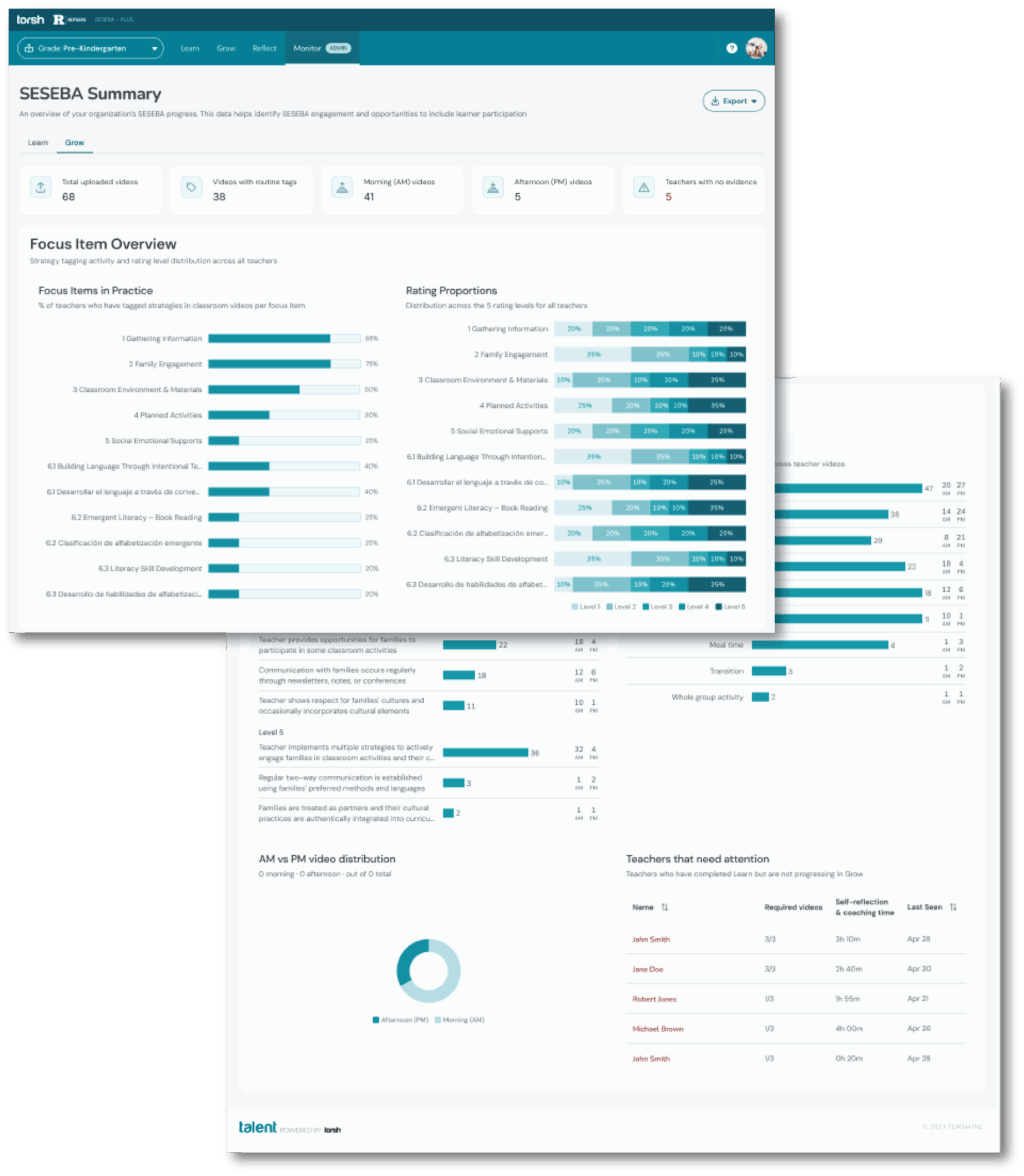
- Evidence-Based Self-Reflection: Teachers upload classroom video evidence, use SESEBA’s framework to self-reflect on their own practice, and tag the specific strategies they observe themselves using. Each Focus Item earns a Rating Score based on consistent demonstration, creating a clear picture of where an educator is and where they’re headed. AI-assisted feedback supports the process—but the core of it is structured self-reflection, grounded in SESEBA’s research.
- Real-Time Administrative Monitoring: Program administrators track progress across the full organization through a centralized dashboard. Weekly summaries surface which educators are engaging, where strategy gaps exist, and who may need additional support. SESEBA supplies the research and the framework; TORSH provides the infrastructure to fuel the growth.
Built for District-Level Implementation:
- Fundable: Eligible for Title III, Part A and ESSER carryover funding—sources many districts already have dedicated to ELL programming.
- Scalable: Applicable for Pre-K-8 and beyond, making it a viable, long-term investment for programs at any stage of growth.
- Supported: Whether you need a high-level introduction to the framework, strategic guidance for administrators, or targeted training for coaches, our SESEBA Professional Development pathways ensure your team has the exact foundational knowledge needed to roll this system out successfully.
For district leaders watching MLL enrollment grow while outcomes stall, SESEBA on TORSH is not just another ESL professional development course. It is the comprehensive system that turns research into measurable practice change—for every educator, not just the ones lucky enough to work with a great coach.
Want to see the research behind this framework? [Read the full report on MLL Outcomes and Educator Interaction →]